Two young raccoons cuddling closely on grass.
Feburary 13, 2025  |  Raccoons

When Do Raccoons Have Babies?

Raccoons mate in late winter, usually between January and March. Their gestation period lasts about 60 days, so baby raccoons are typically born from April to May. However, it is not uncommon for babies to be born as early as March or as late as June. Understanding the raccoon breeding season is important because pregnant raccoons seek warm places that are safe from predators to nest. This makes your home, especially your attic and chimney, an appealing nesting site.

Table of Contents

  • Raccoon Baby Season
  • Raccoon Litter Size
  • Raccoon in the Attic
  • Dangers of Raccoons
  • Raccoon Removal
  • Raccoon FAQs
Get rid of boxelder bugs with our professional pest control in Milwaukee, Wisconsin.
Schedule Now!

Keep Boxelder Bugs Out of Your House with Safe, Effective Pest Control

Close up image of a boxelder bug highlighting key identification features, including its black body with red-orange markings, six legs, long antennae, and red eyes.

What Are Boxelder Bugs?

The boxelder bug (Boisea trivittata) is a familiar sight in Wisconsin during late summer and fall. Adults are about half an inch long, with black bodies lined by red or orange markings along the thorax and wing edges. Their elongated bodies are shaped like sunflower seeds, with flat wings folded across their backs. They also have red eyes that bug out, six legs, and long antennae. Nymphs, or immature bugs, are smaller, bright red, and wingless.
  • Size: 1/2 Inch (11-13 mm)
  • Color: Black with Reddish-Orange Markings on the Dorsum
  • Shape: Flat, Elongated, Oval Body
  • Wings: 2 Pairs
  • Antennae: Yes
  • Legs: 6

When are Boxelder Bugs Most Active in Wisconsin?

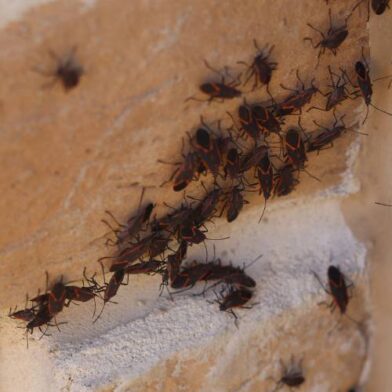
Boxelder bugs are most active from September to November. As temperatures drop, they leave their host trees in search of warmth and shelter. They often gather in huge numbers on windows and warm, sunny walls, particularly on the south and west-facing sides of houses. They then look for cracks, vents, and other entry points to overwinter indoors. Identifying these infestations early is the best way to prevent a fall invasion from becoming a winter-long nuisance.
Cluster of small black and red bugs on a beige wall.

Where Do Boxelder Bugs Hide in Homes?

Windows and Doors

Check frames for worn weather stripping, cracked caulking, or tiny gaps. Bugs often bask on sunny window ledges before sneaking through openings.

Siding and Exterior Walls

South- and west-facing siding attracts clusters of boxelder bugs on sunny afternoons. Cracks or loose panels provide easy access indoors.

Attic Vents and Rooflines

Warm air escaping near soffits, vents, and eaves lures boxelder bugs upward. Unscreened or unsealed areas become hidden entryways.

Foundation and Utility Lines

Inspect ground-level cracks and gaps around plumbing, gas, and electrical penetrations. Bugs often cluster at the base of homes before working inside.

Basements and Crawl Spaces

Once indoors, boxelder bugs tend to settle in cool, quiet areas such as basements, wall voids, or crawl spaces.

Why are Boxelder Bugs a Problem Indoors?

While boxelder bugs don’t spread disease or cause damage, their vast numbers create headaches for homeowners, especially in the fall when they seek warmth and shelter in our homes. They can leave dark stains on walls, curtains, and furniture, emit a foul odor when crushed, and reappear throughout the winter as they move around indoors. In Milwaukee’s climate, once they establish themselves inside, they can linger until spring, making fall prevention essential.

6 Ways to Keep Boxelder Bugs Out of Your Home

Your first line of defense against boxelder bugs is prevention. Here are some quick tips to keep boxelder bugs at bay.

Seal Cracks and Crevices

Small gaps in door and window frames, siding, foundations, or utility lines are open invitations for pests. Seal cracks with wire mesh and caulk to deter boxelder bug infestations.

Install Screens and Weatherstripping

Torn window screens and worn weatherstripping are easy access points. Replacing them not only helps with pest control but also improves your home’s energy efficiency.

Install Vent Covers

Cover vents, soffits, and chimneys with fine mesh screening to prevent boxelder bugs from slipping inside when seeking warmth.

Clean Up Landscaping

Trim trees, shrubs, and other vegetation near the house. Rack up leaves and other plant debris where boxelder bugs gather.

Vacuum, Don't Squish

If boxelder bugs make it indoors, vacuum them up instead of squishing. Crushing them can release an unpleasant odor and leave stains on walls or fabric.

Apply Perimeter Treatments

A licensed pest professional can apply exterior barrier sprays to siding, foundations, window and door frames, and other entry points in early fall before bugs move indoors.

Professional Boxelder Bug Control in Milwaukee, WI

Advanced Wildlife and Pest Control offers boxelder bug control and extermination services in Milwaukee and southeastern Wisconsin. Our certified exterminators apply targeted pest treatments designed to provide long-lasting protection, focusing on high-risk areas such as siding, windows, and foundation gaps. We rely on safe and effective products, paired with proven exclusion methods, to prevent boxelder bugs from settling indoors.

With our professional approach, you can enjoy the fall season without the frustration of swarms gathering on your walls or creeping into your living spaces. Contact us today at (262) 242-4390 for reliable pest control in Milwaukee and Southeastern Wisconsin.

Boxelder Bug FAQs

Do boxelder bugs bite?

No, boxelder bugs don't bite people or pets. They have piercing-sucking mouthparts used for feeding on plants. They may feel like a mild pinch if handled, but they are not harmful and do not spread disease. The main issue is that they gather in large numbers and can stain surfaces with their droppings, making them a nuisance more than a danger.

What trees do boxelder bugs feed on?

Boxelder bugs mainly feed on boxelder trees, but they may also eat from maple, elm, and ash trees.

Are boxelder bugs harmful to pets or children?

No, boxelder bugs are harmless to both people and pets. They don't bite, spread disease, infest food, or damage property. The worst they do is give off a foul odor or leave stains if crushed. Rarely, someone with allergies or sensitive skin may notice mild irritation after direct contact. Overall, they're a nuisance pest – bothersome but not dangerous.

How long do boxelder bugs live?

Boxelder bugs live about one year. They spend the summer feeding and reproducing, then overwinter in protected areas like homes before becoming active again in spring.

What is the lifecycle of boxelder bugs?

Boxelder bugs go through a simple lifecycle: egg → nymph → adult. In spring, females lay eggs on trees, leaves, or in crevices. These hatch into small red nymphs that grow through several molts over the summer. By late summer, they become adults, mate, and begin the cycle again. Adults often seek shelter in homes or buildings to overwinter, allowing them to survive until the following spring.
February 13, 2025 | Raccoons

When Do Raccoons Have Babies?

Raccoons mate in late winter, usually between January and March. Their gestation period lasts about 60 days, so baby raccoons are typically born from April to May. However, it is not uncommon for babies to be born as early as March or as late as June. Understanding the raccoon breeding season is important because pregnant raccoons seek warm places that are safe from predators to nest. This makes your home, especially your attic and chimney, an appealing nesting site.

Table of Contents

  • Raccoon Mating Season

  • Baby Raccoons

  • Raccoons in the Attic

  • Are Raccoons Dangerous?

  • Raccoon Removal

--

How Many Babies Do Raccoons Have?

A female raccoon only has one litter a year with 2 to 6 babies, called kits. Raccoons are born with their eyes closed and cannot see until they are about three weeks old. At birth, they are entirely dependent on their mother. The mother weans the kits after approximately two to three months. By mid-summer, the young raccoons start to explore and forage. Typically, the young raccoons leave their mother when they are 8 to 10 months old, although some stay with her for up to a year through the winter.

--

Raccoons in the Attic, Chimney, and House

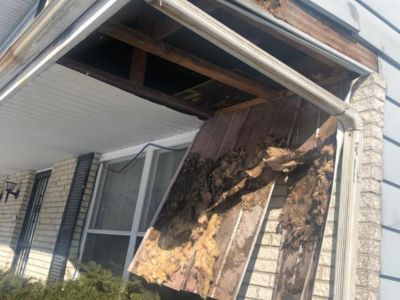
While many animals often work together as co-parents to raise their young, raccoons do not. Female raccoons are single mothers with no help from the male. In fact, a male raccoon will try to kill her babies to bring the female back into heat. Therefore, new mother raccoons seek safe spaces away from males and other predators to raise their young. Attics and chimneys are some of the most common places where female raccoons have their babies, leading to unexpected issues for homeowners.

Raccoons have very strong hands and can easily tear holes in siding, soffits, vents, and fascia. Once inside, they cause all sorts of damage to insulation, walls, ceilings, and woodwork. Raccoons also carry parasites and are one of the primary carriers of rabies in Wisconsin. Unlike mice, which can squeeze through small openings, holes made by raccoons are pretty large and hard to overlook. Additionally, raccoons are very noisy, sounding like humans stomping around in your attic.

Signs of Raccoon in Your Attic

  • Baby raccoons make a high-pitched chirping-like cry (and like human babies, they cry a lot).
  • Loud rustling and thumping sounds in the walls and ceiling, especially at night.
  • Damaged or torn roof shingles, vents, or soffits.
  • Muddy footprints on your roof, siding, or around your home.
  • Urine and feces stains on your ceiling.
  • Seeing an adult raccoon on your property.

--

Are Baby Raccoons Dangerous?

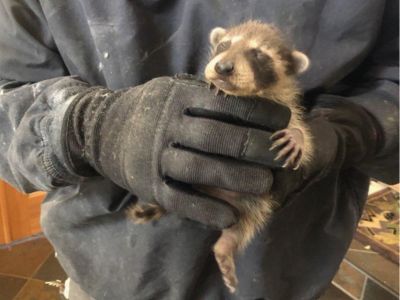
Yes, baby raccoons can be dangerous because they may bite and scratch if you attempt to pick them up, which is why you should have a professional humanely remove them. They can also carry parasites, mites, and diseases passed on to them by their mother. Baby raccoons are not born with rabies; however, they can become infected shortly after birth if their mother is shedding the rabies virus.

Raccoons have very strong hands and can easily tear holes in siding, soffits, vents, and fascia. Once inside, they cause all sorts of damage to insulation, walls, ceilings, and woodwork. Raccoons also carry parasites and are one of the primary carriers of rabies in Wisconsin. Unlike mice, which can squeeze through small openings, holes made by raccoons are pretty large and hard to overlook. Additionally, raccoons are very noisy, sounding like humans stomping around in your attic.

--

Raccoon Removal in Milwaukee, WI

If you discover a family of raccoons living in your attic, contact the wildlife removal professionals at Advanced Wildlife and Pest Control at 262-242-4390. We specialize in humane raccoon removal in Milwaukee and southeastern Wisconsin. Our wildlife specialists safely trap, remove, and relocate the mother raccoon and her babies 30+ miles away from your residence. Our professionals can also repair minor damages caused by raccoons and install heavy-duty chimney caps or vent covers to prevent future wildlife problems.

Table of Contents

  • When Do Raccoons Have Babies?

  • How Many Babies Do Raccoons Have?

  • Signs of a Raccoon Family in Your Attic

  • Are Baby Raccoons Dangerous?

  • Raccoon Removal in Milwaukee, WI

Get rid of nuisance pests and critters with our professional pest control in Milwaukee, Wisconsin.
Schedule Now!