


When Do Raccoons Have Babies in Wisconsin?
Hearing scratching, thumping, or unusual noises in your attic this spring? Those sounds often signal the start of raccoon baby season in Wisconsin! Each year, mother raccoons seek warm, sheltered places to give birth and raise their young. Unfortunately, attics and chimneys provide the perfect nesting spots. In this blog, we’ll cover everything Wisconsin homeowners need to know about raccoon breeding habits, the signs they’ve taken over your attic, and how our humane wildlife removal can safely solve this issue.

Safely Remove Baby Raccoons from Your Home with Humane Wildlife Removal Services

What Time of Year Do Raccoons Have Babies?
Raccoons mate in late winter from January through March. After a gestation period of about 60 days, most litters are born in April and May. However, births can occur as early as March or as late as June, depending on how mild or severe the winter is.
A female raccoon usually gives birth to a litter of 2 to 5 kits. These newborns are completely dependent on their mother for the first several weeks and remain in the den until they’re strong enough to explore on their own. If you hear chirping or scratching noises overhead during this time of year, there’s a good chance you may have an unexpected raccoon family.
Common Signs You Have Raccoons in Your Attic
Raccoons are noisy, destructive, and quick to make themselves at home in attics. Recognizing the early signs can help you address the problem before serious damage occurs.
- Loud rustling or scurrying noises at night
- Damaged roof shingles, vents, or soffits
- Torn or flattened insulation in the attic
- Strong, musky odors or visible droppings
- Footprints on your roof, siding, or gutters
- Seeing an adult raccoon in your yard

Dangers of Raccoons in Your Attic or Chimney
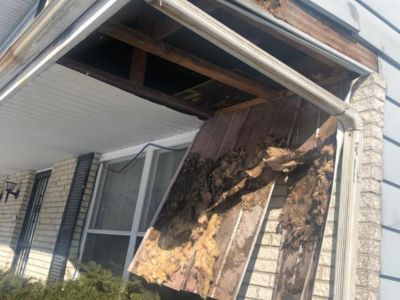
Raccoons in your attic or chimney can quickly cause serious damage and health risks. In a short time, even one raccoon can lead to costly repairs and unsafe living conditions.
- Tear up insulation to build nests
- Chew on electrical wires
- Damage vents, soffits, and shingles
- Create constant nighttime noise
- Contaminate areas with urine and feces
- Spread diseases like leptospirosis, raccoon roundworm, and salmonella
- Become aggressive, especially when mothers are protecting their young
What Does a Baby Raccoon Look Like?
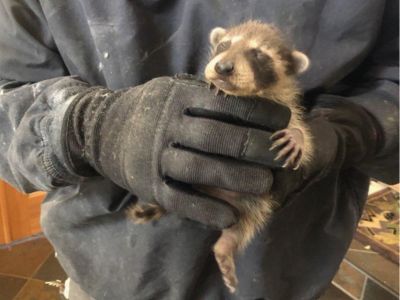
Newborn raccoons are small and fragile, roughly the size of a softball and weighing only a few ounces. At birth, they are blind and unable to hear, making them completely dependent on their mother for survival. Their bodies are covered in a soft, fluffy layer of gray fur that helps keep them warm in the den. Their well-known black facial mask develops gradually as they grow. Around two to three weeks of age, their eyes begin to open, and by six to eight weeks, they become more active and start exploring outside the den. Even though they grow quickly, baby raccoons remain highly vulnerable during these early stages of life.

Humane Raccoon Removal in Milwaukee, WI
If you suspect a raccoon family has moved into your attic or chimney, call the wildlife control specialists at Advanced Wildlife and Pest Control at (262) 242-4390. We provide humane raccoon removal services throughout Milwaukee and southeastern Wisconsin, using safe and proven methods to remove both the mother and her babies without harm. Our team also repairs minor damage and installs durable chimney caps and vent guards to help keep your home protected from future wildlife intrusions.
Safely Remove Raccoons from Your Home!
Get rid of nuisance raccoons with our humane wildlife removal in Milwaukee, Wisconsin.
Call Now! (262) 242-4390Frequently Asked Questions
Do raccoons return to the same place each year?
Yes, raccoons often return to the same den sites if they were successful in the past. If your attic or chimney has been used before, it is very likely to be used again unless properly sealed and protected.
What should I do if a raccoon family is in my attic?
If you suspect a raccoon family in your home, avoid disturbing them. Mother raccoons can become aggressive if they feel their young are threatened. The safest approach is to contact a professional wildlife removal service to handle the situation humanely. After removal, it’s essential to seal all potential entry points, such as chimneys, vents, and soffits, to prevent future infestations.
What does a baby raccoon sound like?
Baby raccoons make high-pitched noises that are often mistaken for birds. You may hear chirping, whining, or squealing, especially when the mother is away searching for food.
Why do baby raccoons cry?
Baby raccoons cry to communicate with their mother. This can signal hunger, cold, discomfort, separation, or fear. Persistent crying, especially from an attic or chimney, is often a strong indicator that a nest is nearby.
Do mom and dad raccoons stay together?
No, raccoons are solitary animals. The female raises the kits alone. Male raccoons do not help raise the young and may even pose a threat to them, which is why females seek out safe, sheltered spaces to nest.
Are baby raccoons dangerous or friendly?
While baby raccoons may look cute, they are still wild animals. They can carry diseases such as rabies and roundworm, and may bite or scratch if frightened. Additionally, the mother is highly protective and can become aggressive if approached. It’s always best to keep your distance and let trained professionals handle the situation.