

Milwaukee's Best Wasp Exterminator
Bees, wasps, and hornets all play a valuable role in our ecosystem, but when they build nests on or around your home or business, they can quickly become a serious safety concern. Proper identification is critical, as each species requires a different approach. We prioritize the protection and preservation of honey bees whenever possible. However, aggressive stinging insects like hornets, wasps, and yellow jackets can pose a real threat, especially to children, pets, and anyone with allergies. If you’ve discovered a nest or active hive on your property, contact Milwaukee’s trusted pest control professionals for safe, responsible, and effective removal.
Keep Stinging Pests Out of Your Property!
Protect your home or business from stinging insects with safe pest control solutions in Milwaukee.
Give Us a Call Today!What are the Signs of a Wasp Nest on Your House?
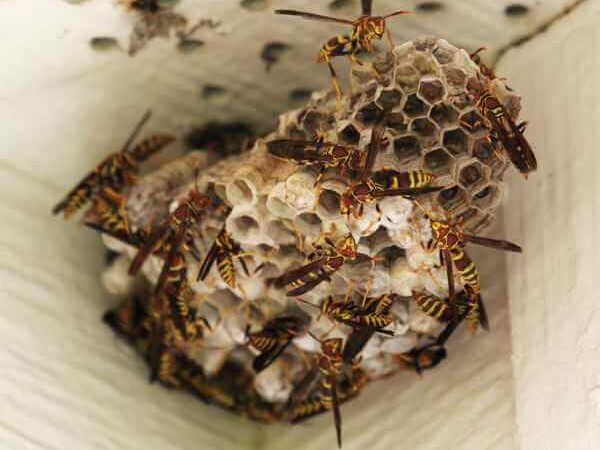
The most common sign of a wasp nest on your property is an increased number of stinging insects swarming around one particular area. Wasp nests are distinctive; they can become quite large and are made from chewed wood and mud. Look for round or oval-shaped, grey, papery nests hanging from trees, walls, eaves, or under overhangs. Additionally, faint buzzing sounds coming from your walls or ceiling may indicate a beehive or wasp nest inside your house or office walls.
Professional Wasp Nest Removal in Milwaukee, WI
Our certified pest management professionals at Advanced Wildlife and Pest Control provide safe, effective, and reliable solutions to remove bees, wasps, and hornets from your home or business. Our pest specialists will safely remove the nest and apply a preventative treatment to help stop wasps and hornets from building new nests on your home.
Are Stinging Insects Dangerous?
When bees, wasps, and hornets feel threatened, they are known to sting. While most stings cause mild discomfort, some may result in severe allergic reactions that require immediate medical care and may cause death. Swarms can pose a risk to people and animals. Carpenter bees drill tunnels into wood to make nests, which can weaken the structure of your home over time. These tunnels and holes can also lead to water damage and other insect infestations.
- Stinging Pest FAQs -
Frequently Asked Questions
Should I remove a wasp nest myself?
No, you should not try to remove a wasp nest yourself. Wasps can be very aggressive, and we don’t want you to risk getting seriously injured by numerous stings. Instead, call our professional wasp exterminators at 262-242-4390. We have the proper equipment and protective gear to safely remove the nest from your property.
Do you remove honey bees?
Advanced Wildlife and Pest Control aims to protect and safeguard honeybees in Wisconsin. Therefore, we work with local beekeepers to safely and humanely remove and relocate honeybees and hives from customers’ homes and properties.
Should I hire a professional to remove bees?
Yes, it is best to hire a professional for bee removal, especially when it comes to honey bees. While it is not explicitly illegal to kill honey bees in Wisconsin, it is generally discouraged. Honey bees are classified as livestock and are regulated by the Wisconsin Department of Agriculture, Trade and Consumer Protection (DATCP). Therefore, killing them without a valid reason could be deemed irresponsible and may lead to penalties depending on the circumstances.
Can wasps sting multiple times?
Yes, wasps can sting multiple times because their stingers are straight and do not pull out after stinging, unlike honey bees that have barbed stingers.
- Types of Stinging Pests -
Common Stinging Insects in Wisconsin

Bald-Faced Hornets
Bumblebees

Carpenter Bees

Honey Bees

Mining Bees
Mud Daubers
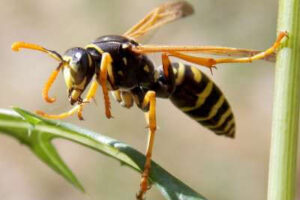
Paper Wasps
