



Professional Turtle Removal in Milwaukee, WI
Advanced Wildlife and Pest Control provides professional turtle removal services throughout Milwaukee and southeastern Wisconsin. Our certified wildlife specialists safely and efficiently capture and remove nuisance turtles from ponds and surrounding properties using humane, proven methods. Direct capture and specialized live turtle traps are the most effective techniques for safe removal. Once captured, turtles are relocated 25+ miles away from your property in accordance with local regulations.
Keep Turtles Out of Your Pond!
Get rid of turtles with our humane wildlife removal services in Milwaukee, Wisconsin.
Give Us a Call Today!What are the Signs of a Turtle in Your Pond?
Ponds attract a variety of wildlife to your backyard—some welcome, others less so. Most turtles are gentle and harmless, but snapping turtles can pose a real danger to people, children, and pets due to their exceptionally strong bites. Even non-aggressive species, like painted turtles, can carry salmonella, and turtles in general may damage gardens, fisheries, or landscaping.
Do not attempt to pick up a snapping turtle! These reptiles can stretch their necks across their own shells and deliver serious bites, and their sharp claws can cause injury as well. Unless a turtle is in immediate danger, it’s best to leave it where it is. For ponds or properties with snapping turtles, contact our wildlife professionals for safe and humane removal.
- Turtle Identification -
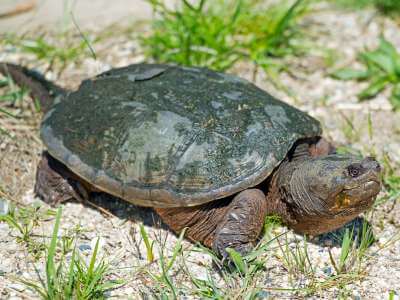
What Does a Turtle Look Like?
Turtles are semi-aquatic reptiles known for their distinctive shells, which are made of bone covered in keratin plates – the same substance as human fingernails. A turtle’s shell is permanently attached to its back and ribs, so it cannot be removed. These reptiles come in a variety of colors, including shades of green, brown, and gray, which help them blend into their natural surroundings. Turtles are slow-moving but remarkably long-lived, with some species surviving over 100 years. Wisconsin is home to 11 turtle species, including the common snapping turtle, wood turtle, and painted turtle.

- Turtle FAQs -
Frequently Asked Questions
What do turtles eat?
Turtles are omnivores that primarily eat fish, snails, crayfish, rodents, worms, fruits, grasses, and other vegetation.
Where do turtles live?
Turtles live in a wide variety of habitats, including ponds, rivers, lakes, marshes, and wooded areas. Turtles spend most of their time in the water but climb out to bask on banks, logs, or rocks on sunny days.
When do turtles have babies?
Most turtles in Wisconsin mate in the spring as soon as they emerge from hibernation. Female turtles dig shallow bowl-shaped nests in sunny, well-drained uplands to lay their eggs. Snapping turtles lay about 20 to 40 creamy white ping-pong ball-sized eggs. Painted turtles lay about 5 to 6 eggs. The incubation period takes from 70 to 90 days, and hatchings emerge in late summer.
How long do turtles live?
A turtle’s lifespan depends on the species, but most species live into their 40s. Turtles have a few predators, including raccoons, coyotes, lizards, and birds. Unfortunately, many turtles die as a result of vehicle collisions.
What does turtle poop look like?
Turtle droppings can vary in appearance and consistency depending on the size and diet of the turtle species. Turtle poop is usually green to brown. The poop may be fibrous or very loose for species that eat a lot of grass and plants.
What do turtle tracks look like?
Turtle tracks are round with five deep claw marks. In the center of the trail, you will usually see a line left by the tail.